What is Steel Wire Rope?
Steel wire rope is a complex, high-strength cable made by helically twisting multiple strands of steel wire around a central core. Designed to handle significant forces with reliability and precision, it is widely used for lifting, pulling, supporting, and securing heavy loads in demanding industrial applications. Common uses include crane hoists, elevator systems, winches, and various material-handling equipment.
Key Considerations When Selecting Steel Wire Rope
Construction Type
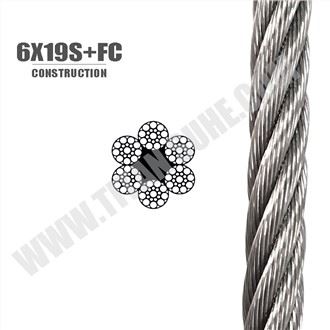
The construction of a wire rope is fundamental, as it determines its core characteristics and suitability for specific applications. The classification typically includes: number of strands, number of wires per strand, type of strand construction (e.g., Seale, Warrington, Filler), core type (e.g., fiber core or independent wire rope core)
For example, the designation 6×19S+FC indicates: 6 strands,19 wires per strand,Seale strand construction, Fiber core
Each combination offers different properties in terms of flexibility, abrasion resistance, strength, and fatigue life.

Diameter
The rope diameter must be compatible with the sheaves, drums, and other equipment it will run over or through. Using an incorrect diameter can accelerate wear, reduce efficiency, or even cause mechanical failure.
Tensile Strength Grade
The nominal tensile grade, expressed in N/mm², indicates the strength of the individual wires. Higher grades provide greater breaking strength but may offer less ductility. The chosen grade should align with the working load and safety factor requirements of the application.
Surface Treatment and Coating
Depending on the operating environment, surface protection may be necessary to enhance durability. Common options include:
Ungalvanized (bright), Electro-galvanized, Hot-dip galvanized, Polymer-coated (e.g., PVC, PP, PE, nylon)
Selection should be based on exposure to moisture, chemicals, abrasion, and temperature extremes.
Summary
Selecting the right wire rope involves careful evaluation of its construction, diameter, tensile grade, and surface treatment. Matching these parameters to the actual operating conditions-including load type, environmental exposure, and equipment compatibility-is essential to ensure safety, performance, and service life. Always refer to manufacturer guidelines and relevant industry standards when making a selection.