


How does a freight elevator's leveling system work?
As a supplier of freight elevators, I've received numerous inquiries about the functionality of our products, especially about the leveling system. In this blog post, I'll delve into how a freight elevator's leveling system operates, shedding light on its importance and the technology behind it.
Understanding the Basics of a Freight Elevator Leveling System
A freight elevator leveling system is a crucial component that ensures the elevator car stops accurately at each floor. This is essential for both loading and unloading cargo safely and efficiently. Without a precise leveling system, there could be gaps between the elevator car and the floor, which could lead to accidents or damage to the goods being transported.
An effective leveling system works in harmony with other elevator components, such as the hoistway, the control system, and the drive mechanism. It uses a combination of sensors, controllers, and actuators to achieve the desired precision.
Key Components of a Leveling System
Sensors
Sensors are the eyes of the leveling system. They detect the position of the elevator car in the hoistway. There are several types of sensors used in freight elevators, including:
- Hall - Effect Sensors: These sensors use the Hall effect to detect the presence of a magnetic field. They are often used to detect the position of the elevator car relative to the landing doors. When the elevator car approaches a floor, the Hall - effect sensor sends a signal to the control system, indicating its proximity.
- Proximity Sensors: Proximity sensors can detect the presence of an object within a certain range. In the context of a freight elevator, they are used to sense when the elevator car is close to the landing. They can be based on different technologies, such as inductive, capacitive, or ultrasonic.
Controllers
The controller is the brain of the leveling system. It receives signals from the sensors and processes them to determine the appropriate action. Modern freight elevator controllers are often based on microprocessors, which can perform complex calculations quickly and accurately.
The controller analyzes the position data from the sensors and compares it to the predefined position for each floor. If the elevator car is not at the correct position, the controller sends commands to the actuators to make the necessary adjustments.
Actuators
Actuators are responsible for moving the elevator car to the correct position. In a freight elevator, these are usually hydraulic or electric motors.
- Hydraulic Actuators: In a hydraulic freight elevator, the actuator is a hydraulic cylinder. When the controller sends a signal, the hydraulic system pumps fluid into or out of the cylinder, causing it to extend or retract and move the elevator car up or down to the correct level.
- Electric Actuators: Electric actuators, on the other hand, use electric motors to drive a pulley or a gear system. The motor rotates in response to the controller's commands, moving the elevator car to the desired position.
How the System Operates
Let's take a closer look at the step - by - step operation of a freight elevator leveling system.
Approach to a Floor
As the elevator car approaches a floor, the sensors start to detect its proximity. The Hall - effect sensors and proximity sensors send signals to the controller, indicating that the car is getting close to the landing.
Precise Positioning
Once the elevator car is within a certain range of the floor, the controller takes over. It compares the current position of the car, as reported by the sensors, to the ideal position for that floor. If there is a deviation, the controller calculates the exact amount of movement needed to bring the car to the correct level.
Adjustment
The controller then sends commands to the actuators. If the elevator is using a hydraulic system, the hydraulic pump adjusts the flow of fluid to the cylinder to move the car up or down slightly. In an electric system, the motor rotates at a precise speed and direction to achieve the necessary adjustment.
Verification
After the adjustment is made, the sensors verify that the elevator car is now at the correct position. If the position is still not accurate, the process repeats until the car is perfectly level with the floor.
Importance of a Reliable Leveling System
A reliable leveling system is of utmost importance in a freight elevator.
Safety
Safety is the top priority when it comes to freight elevators. A precise leveling system ensures there is no gap between the elevator car and the floor, reducing the risk of tripping or falling while loading or unloading heavy goods. It also prevents the possibility of the elevator car moving unexpectedly during the loading or unloading process.
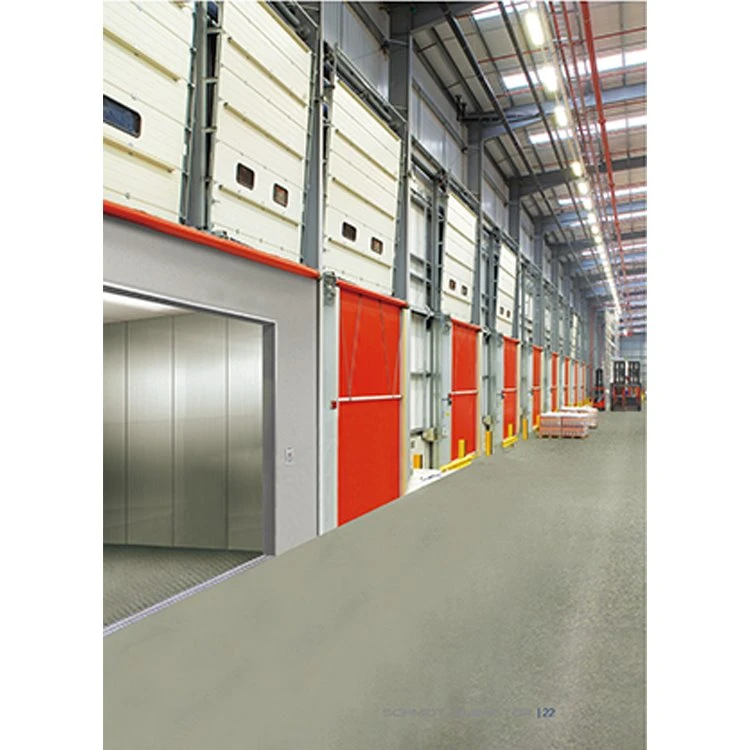

Efficiency
An accurate leveling system improves the efficiency of cargo handling. Workers can quickly and easily move goods in and out of the elevator without having to worry about uneven surfaces or misalignments. This saves time and increases productivity.
Equipment Protection
Proper leveling also helps protect the equipment. When the elevator car is level, there is less stress on the doors, the hoistway equipment, and the goods being transported. This can extend the lifespan of both the elevator and the cargo it carries.
Types of Freight Elevators and Their Leveling Systems
At our company, we offer two main types of freight elevators: Machine Roomless Freight Elevator and Machine Room Freight Elevator.
Machine Roomless Freight Elevator
Machine roomless freight elevators are a space - saving option. Their leveling systems are designed to fit within the compact structure of the elevator. The sensors and controllers are often integrated into the elevator car or the hoistway, reducing the need for a separate machine room. Despite the limited space, these systems are highly accurate and reliable, providing the same level of performance as traditional systems.
Machine Room Freight Elevator
Machine room freight elevators have a dedicated space for the control equipment and the drive system. This allows for more flexibility in the design of the leveling system. The larger machine room can accommodate more sophisticated sensors and controllers, which can offer greater precision and redundancy.
Conclusion
In conclusion, the leveling system of a freight elevator is a complex and critical component that ensures safe and efficient cargo handling. By using a combination of sensors, controllers, and actuators, it can accurately position the elevator car at each floor.
Whether you are in need of a Machine Roomless Freight Elevator or a Machine Room Freight Elevator, our company has the expertise and experience to provide you with a high - quality solution. If you're interested in learning more about our freight elevator products and how they can meet your specific needs, don't hesitate to reach out to us for a procurement discussion.
References
- "Elevator Technology Handbook"
- Industry research reports on freight elevator systems





