


If you've ever ordered heavy machinery, construction materials, or industrial components, you know that lifting and moving those items safely is non-negotiable. And when it comes to choosing the right lifting gear, two options that come up over and over are round slings and flat slings. As a round sling supplier who's worked with fabricators, warehouse managers, and construction teams for years, I hear the same question all the time: What's actually the difference between these two slings-and does it matter for my job?
It's not just a matter of shape. There are gaps in how they're made, how they handle load, what they're best for, and even how you have to care for them. A wrong pick can lead to damaged cargo, safety incidents, or even wasted money on gear that doesn't fit your needs. Let's break this down like we do with our regular customers-no jargon, just real-world info that actually matters.
First, The Core: How They're Built
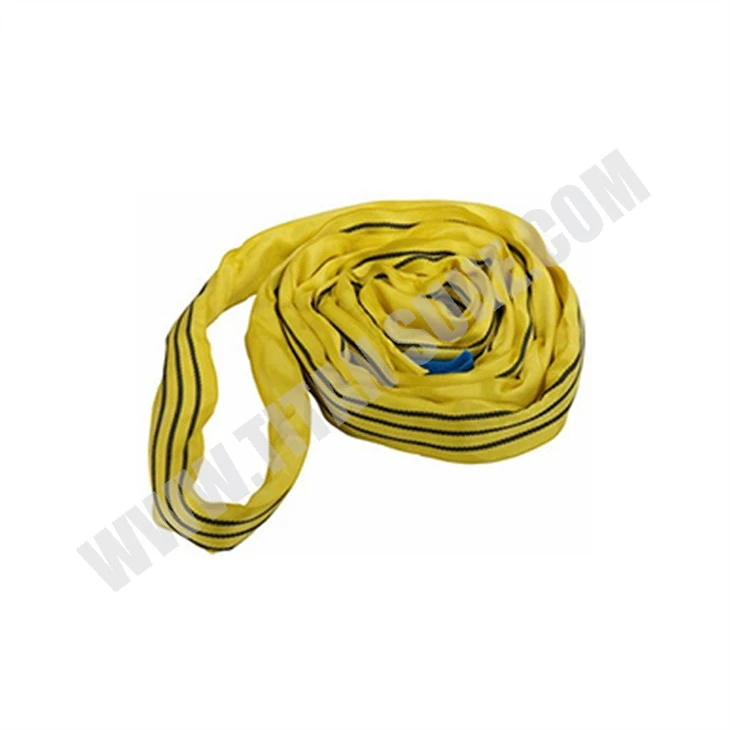
To tell the difference, you start with the basics of their construction, because that's where every other trait comes from. Let's start with round slings, the product I specialize in. These aren't woven flat like a strap-they're made from a continuous, high-strength polyester filament core wrapped in a durable polyester sleeve, usually with extra reinforcement on the ends called wear sleeves (or chafe guards). The core is what actually carries the weight; the sleeve protects it from snags, cuts, or abrasions when it rubs against sharp edges of a load. The design is seamless, which means no weak points from stitches or seams that can fray over time.
Most round slings are endless, too-they're a single loop of material, which makes them easy to wrap around a load without handling loose ends. We carry options for every weight here, like our 3 Tons Industrial Lifting Flexible Round Sling and our 1ton Endless Round Sling Polyester, tailored for small warehouse lifts and heavy industrial loads alike.
Flat slings, on the other hand, are made from woven flat polyester webbing. They're basically just a wide, flat strap, stitched together at the ends to form loops. The strength comes from the weave of the webbing itself, so the stitching along the loops is a critical part of the structure. That means a weak stitch, a tear in the weave, or a snare from a sharp corner can put the whole sling at risk of failing. You can even check this yourself: a flat sling will look like a thick, woven ribbon, while a round sling is a thick tube with a smooth outer cover. For a closer look at flat sling construction, check out our Polyester Endless Flat Woven Webbing Sling Belt.
Load Distribution: Where Round Slings Shine (And Flat Slings Fall Short)
The biggest practical difference comes down to how each sling spreads the weight of your load. Round slings are designed to conform to the shape of the load, evenly distributing tension across their entire core. That means they exert pressure evenly on the material they're holding, which is perfect for fragile, round, or irregularly shaped items-like pipes, coils, barrels, or even pallets with uneven edges. This also protects the load itself: if you're lifting a delicate metal coil or a stack of glass panels, a round sling won't dig into the surface and cause scratches or dents like a flat sling might.
Flat slings, by contrast, are rigid in their flat shape. They create concentrated points of pressure where they contact the load, especially if the load has sharp edges. If you use a flat sling to lift a steel beam, for example, the edges of the beam will press into the narrow width of the flat sling, creating friction that can fray the webbing over time or even slice through it. The force from a concentrated pressure point is also higher-if a 10,000 lb load is spread evenly across a round sling's full width, each inch carries far less stress than if that same load is squeezed into a 2-inch wide flat sling. That makes flat slings more prone to damage when lifting items with sharp or irregular surfaces.
It's worth noting, though, that flat slings are often stiffer than round slings. That might sound like a downside, but it's actually an advantage for loads that need extra support, like stacked bricks or flat steel plates, where a stiff sling won't shift mid-lift. The stiffness also makes flat slings easier to layer or stack for multi-point lifts, but only if the load is flat and uniform.
Weight Capacity: It's Not Just About The Rating
Both slings are made from high-tensile polyester, so their weight ratings (called working load limits, or WLL) can overlap, but how those ratings work is different. Round slings have a higher strength-to-weight ratio because the continuous core spreads tension evenly. A 3-ton round sling, for example, is lighter and more flexible than a flat sling with the same WLL, which makes it easier to maneuver in tight spaces. That's why we get a lot of requests for our 3 Tons Industrial Lifting Flexible Round Sling for warehouse aisles or construction sites where space is tight.
Flat slings, because their strength comes from the weave and stitching, often need a wider body to reach the same WLL as a round sling. A 3-ton flat sling might be 6 inches wide, while a 3-ton round sling is only a few inches in diameter. That means flat slings can be bulkier and harder to store, especially for lower-capacity uses. The tradeoff, though, is that flat slings have a lower minimum bend radius-meaning they're more stable when wrapped around small objects. Wait, that's not right, actually: a round sling's flexibility means it can bend around a 4-inch pipe without issue, but a flat sling needs a larger bend to avoid damaging the weave. For very small loads, a flat sling might work better, but for most industrial lifting over 1 ton, round slings are more efficient.
Durability And Care: What Shortens A Sling's Life
Both slings have a lifespan, but they fail in different ways, so how you care for them matters. Round slings' main enemies are cuts, abrasions, and heat. The outer sleeve is designed to take the brunt of contact, but if the core gets damaged (you can check this by peeling back a small section of the sleeve to look at the filaments), that's a safety hazard. Round slings also can't handle extreme heat-above 180 degrees Fahrenheit, the polyester core can weaken, so they're not ideal for lifting hot metal or near welding operations.
Flat slings' biggest risks are snags, broken stitches, and tears in the weave. Because they're flat, the edges can catch on rough surfaces, tearing the webbing. Stitches at the loops are a common weak point, so you have to check them regularly for fraying. Flat slings are also less flexible, so they're more likely to crease if folded incorrectly, which can damage the weave over time.
Cleaning is similar for both-you can wipe them down with mild soap and water, avoid harsh chemicals, and air dry them away from direct sunlight. But round slings are easier to inspect for hidden damage, since their core is inside the sleeve, while flat slings' weave is exposed, so you can spot tears more easily at a glance.

When To Use Which? Real-World Examples
Let's put this all together with common use cases, because the right sling depends entirely on your job. Use a round sling if you're lifting:
- Round or irregular loads: pipes, barrels, coils, tanks
- Fragile cargo: glass panels, polished metal parts, delicate machinery
- Tight spaces: warehouse aisles, stacked pallets, construction scaffolding
- Frequent multi-wrap lifts: wrapping twice around a load for extra stability, which round slings handle easily
That's why our Endless Polyester Round Lifting Sling is one of our most popular products-customers love that it's lightweight, flexible, and fits just about any load shape without damaging the cargo.
Use a flat sling if you're lifting:
- Flat, uniform loads: steel plates, stacked bricks, lumber bundles
- Multi-point lifts where stiffness is needed: spreader bars, evenly stacked materials
- Small, precise loads: small warehouse items, machine parts where a wide flat base keeps the load secure
Common Mistakes To Avoid
I see people mix these up all the time, and it almost always leads to problems. The biggest one is using a round sling for a load it's not designed for. For example, a lot of people use round slings to lift flat steel plates, but the rounded shape of the sling can cause the plates to shift mid-lift, or the edges of the plate can cut into the round sling. On the flip side, using a flat sling for a round coil can lead to concentrated pressure that slices through the flat sling, causing the load to drop.
Another mistake is ignoring the angle of lift. Both slings are rated for straight vertical lifts, and their WLL drops sharply when you angle them. Round slings are a bit more flexible here, but always follow the angle ratings-any sling's capacity is cut in half if you lift at a 60-degree angle, and more at steeper angles.
Final Thoughts: It's All About Your Needs
At the end of the day, there's no "better" sling-there's just a sling that fits your specific task. Round slings are versatile, gentle on loads, and ideal for most irregular or heavy industrial lifting, which is why they're our specialty here. Flat slings have their place too, especially for flat, uniform loads where their stiffness works to your advantage.
If you're still not sure which is right for your next project, or you're looking for reliable, tested slings that meet OSHA standards, our team here has decades of experience helping warehouse managers, construction foremen, and small business owners pick the right gear. We carry options for every capacity, from our 1ton Endless Round Sling Polyester for small warehouse lifts to heavy-duty round slings for industrial operations, all tested for safety and durability.
If you want to learn more about our round slings or see how they compare to our flat sling offerings, reach out to our team today to discuss your lifting needs. We're here to help you make a safe, cost-effective choice that works for your business.
References
- Occupational Safety and Health Administration. (2021). Slings and Rigging Equipment Safety Standards. U.S. Department of Labor.
- Textile Sling Manufacturers Association. (2022). Technical Guidelines for Lifting Sling Construction and Load Capacity.
- American National Standards Institute. (2020). ANSI/ASME B30.9: Slings. American Society of Mechanical Engineers.
- Industrial Rigging News. (2023). "Round vs Flat Slings: Comparing Durability and Application in Modern Lifting." National Rigging Association.





