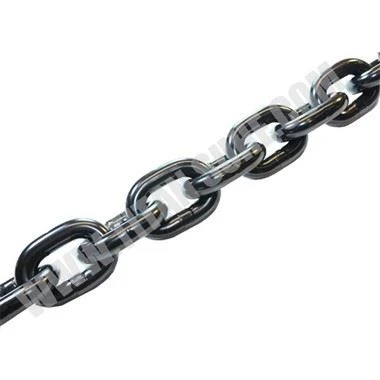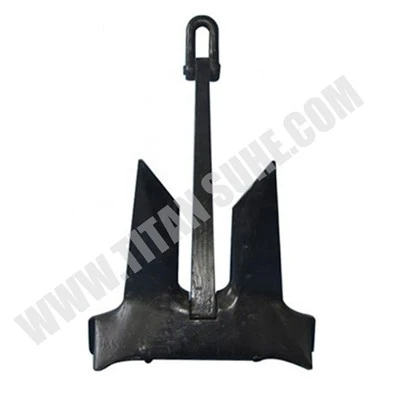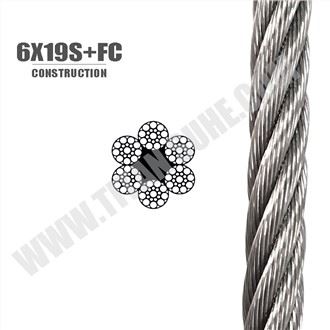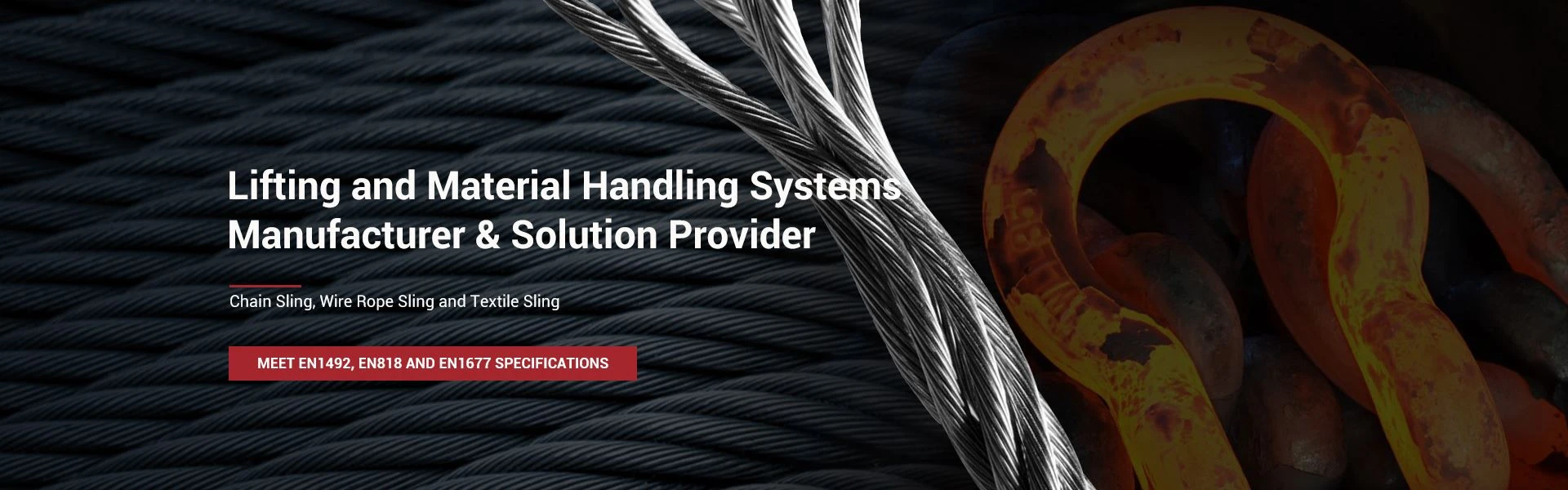
Shackle is a common type of rigging connector which usually connects to chains, ropes, slings and other hardware. They are widely used in various fields due to their simple structure, ease of assembly and disassembly, and strong load-bearing capacity. As an essential component in daily lifting, shipping, towing, and construction operations, selecting the right shackle is critical.
What are shackles?
Shackles are strong, U-shaped metal connectors used to connect other hardware, such as chains, ropes or slings. They consist with a U-shaped body( or bow-shaped body) and a removable pin which with a threaded or clevis-style connection for security.
What are the core functions of shackles?
Connection and Transition: Shackles can connect different types of components. For example, connecting the end of a steel wire rope to a crane hook; connecting a synthetic fiber lifting sling to the lifting lugs of equipment. Without shackles, it would be difficult to connect these different components directly and safely.
Extending or combining rigging: Two or more shackles can be combined with slings to form a more complex lifting arrangement (such as the connection points of a lifting beam).
Changing the direction of force: By using multiple shackles, the direction of ropes or slings can be easily guided to ensure optimal force application, preventing rope twisting or wear.
Providing flexibility and convenience: Quick assembly and disassembly. Compared to welding or securing with knots, shackles (especially pin-type shackles) can be connected and disconnected quickly and easily, greatly improving work efficiency.
Reusable: A qualified shackle can be used repeatedly and safely throughout its lifespan.
How to choose the right shackle?
For shackles, there are different bodies and different pins. Though shackles are simple structure, we need to choose carefully to match the real needs. The following are the most important factors for your shackle selection.
Determine the working load limit(WLL) of shackles
WLL is the most crucial factor of shackles. Before you purchase, you need to determine the WLL of shackles, and it must meet or exceed the maximum weight of your load.
Consider the type of shackles
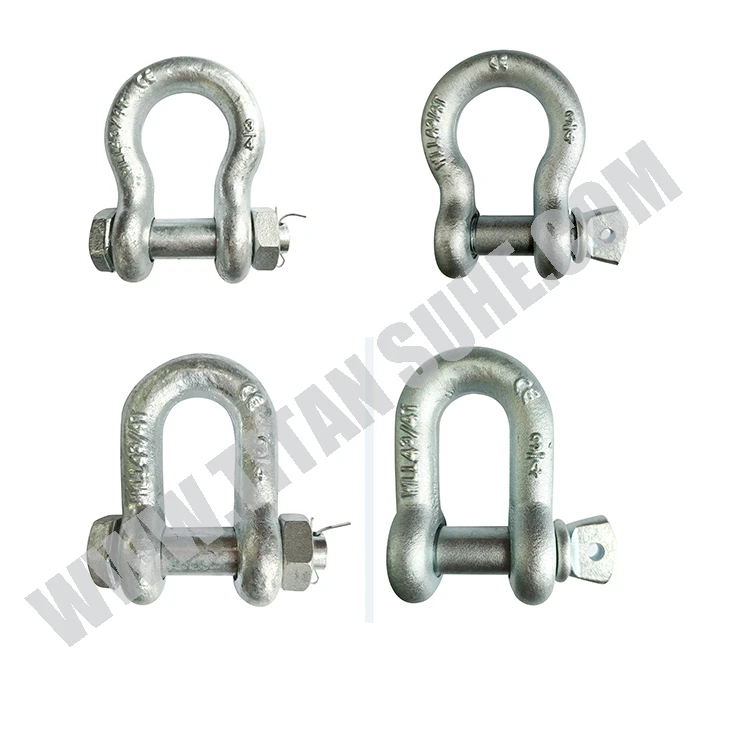
There are two shape body shackle, bow shackle(anchor shackle) and D-shackle. Bow shackle is more suitable for multi-leg slings or when side loading occurs. Compared to bow shackle, D-shackle is ideal for straight-line, inline loads.
Choose the pin type of shackles
Here are two type pins of shackles, screw pin and bolt pin. The screw pin is easy to assemble and disassemble because you can easily unscrew the pin. The screw pin shackle is suitable for quick job and temporary job. The bolt pin shackle is with a nut and cotter pin, so it is more secure than screw pin shackle. If you want permanent installation or a long-term job, bolt pin shackle is the best choice.
Material of shackles
The material of shackles is also important when you select. It concludes alloy steel shackle, stainless shackle and mild steel shackle. Alloy steel shackles offer high strength and are suitable for heavy industry. Stainless steel shackles offer excellent corrosion resistance for marine, chemical, food processing, or permanently outdoor applications. Its WLL is typically lower than an equivalently sized alloy steel shackle. Low-carbon steel shackles have poor corrosion resistance and are suitable for applications with less demanding environmental requirements or where there are low load requirements.
Surface treatment of shackles
Shackles have surface treatment like Hot-Dip Galvanizing and Electro-galvanizing. This is a protective layer. Hot-Dip Galvanizing provides a thick, durable zinc coating for superior corrosion protection in harsh environments. Electro-galvanizing offers a thinner, smoother coating for moderate protection. This will help shackles to work better and to enhance their durability and resistance to corrosion.
Safety factor of shackles
Shackle's safety factor is the ratio of its minimum breaking strength to its working load limit(WLL). Common safety factors are 4:1 and 6:1, which means shackles can withstand 4 times and 6 times the rated load before failing. For example, if a shackle has a working load limit of 6 tons and a safety factor of 4:1, its breaking strength is 24 tons. Overloading it will lead to failure and accidents. This is a built-in safety margin for unseen forces and material variances. It is not an invitation to overload the shackle.
Match the components correctly
The pin diameter should match the hole size of the connecting links or eyes without excessive play. Additionally, the shackle's bow width must freely accommodate the sling eye, link, or other fitting without pinching or causing point loading. It is also necessary to ensure the shackle's rated configuration aligns with how it will be used in your rigging plan.
Safety precautions when using shackles
The correct shackle, if misused, can still fail. Adherence to safety protocols is mandatory.
Trust the Stamp: Only use shackles that are clearly and permanently marked with the WLL, size certificate marks. Unmarked shackles are unsafe and must not be used.
Inspect before each use: Perform a thorough visual and manual inspection before every use. Look for:
Cracks, nicks, or gouges (especially in high-stress areas like the crown and pin holes).
Wear, deformation, or elongation of the body or pin.
Damaged, stripped, or worn threads on screw pins.
Install Correctly: Ensure the pin is fully seated and properly secured (nut tight and cotter pin in place for bolt types; screw pin tightened).
Conclusion
Selecting and using the appropriate shackles is a crucial step in ensuring the safety and efficiency of lifting, transportation, towing, and construction operations. Correct selection requires considering factors such as the working load limit (WLL), shackle type (bow shackle or D-shackle), pin type (screw pin or bolt pin), material (alloy steel, stainless steel, etc.), surface treatment, and safety factor, ensuring a perfect match with the connecting components. Furthermore, strict adherence to safety operating procedures, such as pre-use inspections, avoiding overloading, and regular professional maintenance are essential. Through scientific selection and proper use, shackles, a simple yet critical rigging component, can reliably perform their core functions of connecting, transitioning, redirecting, and providing operational flexibility throughout their lifespan, thereby effectively safeguarding personnel and equipment and improving overall operational efficiency.