Electric hoist is a common type of lifting equipment. If the use of the process of crooked lifting load, the electric hoist and its accessories will produce non-negligible harm. The five main hazards are as follows.
1、Damage to the motor
When the load is lifted diagonally to leave the ground and hang in the air, the load is bound to swing. The swing makes the load produce centripetal force, which makes the load of the motor will increase. Especially when the swinging direction is parallel to the running direction of the trolley, the load will repeatedly act on the electric trolley by swinging a thrust and resistance, so that the load of the motor-driven trolley is sometimes big and sometimes small, i.e. the current through the motor is suddenly big and small. When it is slight, it will reduce the speed of the motor, overheat itself, increase the noise, or even appear abnormal sound; when it is serious, it may blow the fuse or damage the coil of the motor.
2、Damage to open gear
The oblique hanging load will lead to uneven force on both sides of the open gear of the electric trolley. If the electric trolley is running on the track, both sides of the open gear and the friction strength of the track will be inconsistent, and over time there will be unstable tooth meshing, both sides of the wheel pressure asymmetry, making the electric trolley wheel overhang phenomenon. This will reduce the wheel life.
3、Damage to the rope guide
The electric hoist is more a screw type of upper limiter, its screw and the electric hoist on the rope guide are connected, when the rope in the reel winding to a certain number of turns, the rope guide will push the screw to touch the limit switch to make it happen. And when there is a slant hanging, wire rope and rope guide between a lateral squeeze pressure. Under the action of this force, the rope guide is prone to displacement, driving the screw of the limiter also occurs the corresponding displacement, making the rising limit appear in advance or lagging action. If the wire rope tilt angle is too large, the load is heavy, it may damage the rope guide, and then the rising limit will also fail, in the inspection work, our inspectors found that 80% of the rising limit failure is caused by the damage of the rope guide, and the tilt pull is one of the main reasons for the damage of the rope guide.
4、Damage to wire rope
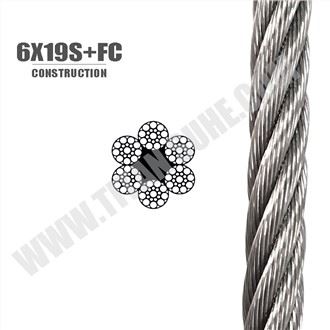
Oblique pull crooked hanging will make the wire rope and guide rope extrusion, thus the friction between guide rope and wire rope will increase, causing the wire rope wear extrusion deformation. When the rope guide is damaged, the wire rope is very easy to take off the groove disorderly, life will be reduced.
5、Wear and tear hooks
When the load is suspended in the air, the load is bound to swing. When the swing amplitude is large, the sling ring chain or sling wire rope sleeve will be in the hook hanging at the dangerous section to produce repeated slippage phenomenon, the possibility of decoupling is very large. The inclined lifting hook and hanging load rope sleeve are also in a tilted state, in lifting load, the rope sleeve is also very easy off-hook. In the decoupling, the rope sleeve will also produce friction with the hook, and over time will accelerate the hook's dangerous section wear, reducing its service life.
These are the five hazards of using electric hoists for crooked tilting. If you want to know more about electric hoists, manual hoists, or other lifting products, please contact us.