


If you're in the lifting or rigging industry, you've probably heard a lot about "impact loading" being the silent killer of wire rope slings. I'm part of a team that supplies these slings every day-seen way too many cases where a client cut corners, ignored a sudden load, and ended up with a broken sling, a damaged load, or even a safety incident. Today I want to break down what impact loading actually does to your wire rope sling, why it's way more damaging than a steady load, and how you can avoid it to keep your gear and your crew safe.
First, let's get clear on what impact loading is. Unlike a static load, which's a steady, gradual force on the sling (say, slowly lifting a 10,000 lb steel beam), impact loading happens when a load is dropped suddenly, or a crane hook lurches upward fast-think of someone yanking a load free that was stuck to the ground, or a load swinging and slamming into a wall mid-lift. The key here is "sudden": the force isn't just the weight of the load, it's multiplied by the speed at which that force hits the sling. Static load calculation is straightforward-you multiply the weight by a safety factor, usually 5:1 or 6:1 for wire rope slings. But impact loading? It can multiply that force by 2, 3, even 10 times in a split second. That's not just "overloading" your sling-that's overwhelming it before you even realize what's happening.
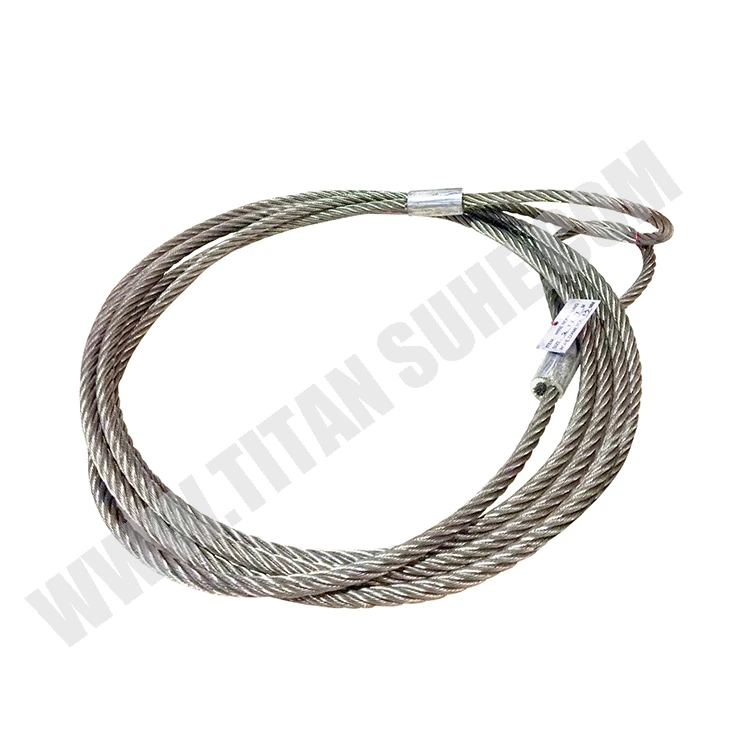
Now, let's talk about what that does physically to a wire rope sling. Wire rope isn't just a single thick wire-it's made of tons of tiny steel wires twisted together into strands, then those strands twisted around a core. Each wire and strand has its own strength, but they all work in sync when the load is steady. When impact hits, that sync breaks. The first thing that happens is "shock loading" concentrates on the topmost wires closest to the hook. Those wires bear the brunt of the sudden force, instead of distributing it evenly across the entire sling. I've seen soft eye spliced loop wire rope slings that looked fine on the outside after an impact-no visible frays, no kinks-but inside, half the outer wires were snapped clean. You can't always tell just by looking at the sling, which is why a post-impact inspection is non-negotiable.
Next up is core damage. The core of a wire rope is usually fiber (polypropylene or steel) that keeps the strands spaced evenly. Impact loading squeezes the core too hard, causing it to flatten or even break. Once the core fails, the strands start rubbing against each other instead of staying separated. That friction generates heat-even at room temperature, repeated impacts can wear the strands thin over time, like a rope rubbing against a rough edge. For galvanized ungalv pressed wire rope slings, the pressed sleeves that hold the ends together are especially vulnerable here. When an impact hits, the sleeve can deform slightly, creating gaps where dirt, moisture, or more stress can get in. Over time, that leads to sleeve corrosion or even sleeve failure, which lets the strands slide apart.
Impact also causes what's called "residual deformation" in the wire rope. Imagine stretching a rubber band and letting go-if you stretch it too far, it doesn't go back to its original size. Same with steel wire rope: a sudden impact can permanently stretch parts of the sling, making it longer than it was before. That changes how it lifts loads-if one section is stretched more than another, the sling won't be level, so the load might tilt, creating more stress points. For 1 2 3 4 leg pressed wire rope slings with sleeve, which are used for multi-point lifts, this uneven stretching is a big problem. Each leg has to carry its share of the load, but if one leg is slightly longer after an impact, the other legs get overloaded, leading to chain reaction failures.
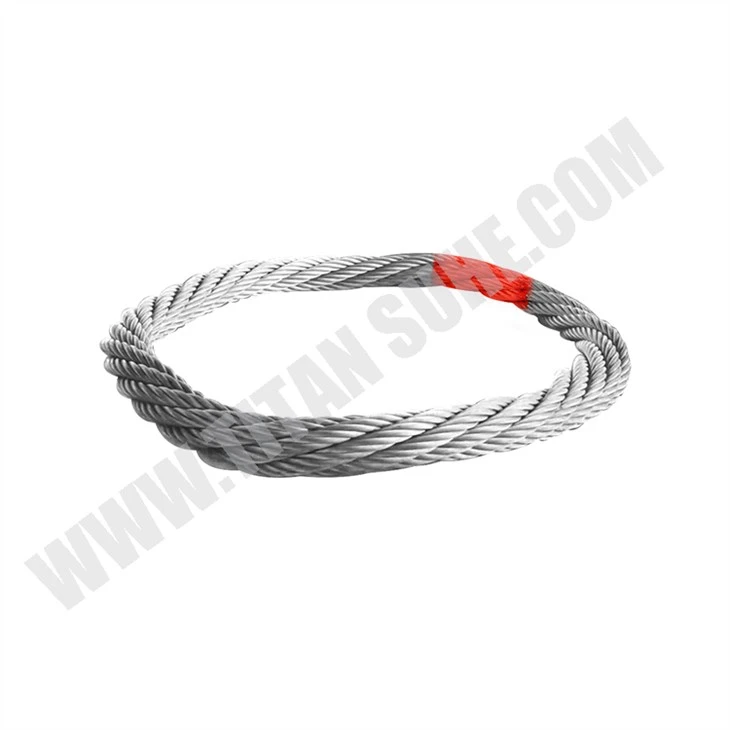
Don't forget about fatigue. One big mistake we see is clients thinking "it only happened once" so they keep using the sling. But impact loading doesn't just cause one-time damage-it adds up. A single small impact might not break the sling, but 5 or 10 impacts? That's fatigue failure. The tiny cracks from each impact grow bigger over time, until the whole sling snaps. We once had a client who used a cable laid grommet sling for a weekly load that sometimes got stuck. One day, after 3 months of those sudden yanks, the sling split right at the grommet, dropping a 2,000 lb pallet of bricks. No one got hurt, but the load was ruined, and the sling was totaled. That's the kind of thing that makes impact loading a long-term problem, not just a one-time scare.
Now, let's pivot to how you can actually protect your wire rope slings from impact loading. The first step is to plan your lifts. If you're lifting a load that's been sitting on the ground, don't yank the crane hook up-jiggle it slowly first to break the load free. If you're lifting something that might swing, make sure you have enough space, and use tag lines to control its movement. That's simple but effective.
Second, choose the right sling for the job. Not all slings are built the same. If you're doing frequent lifts that might have sudden forces, a soft eye spliced loop wire rope sling might be better than a pressed one? Wait, no-actually, it depends on the load. Soft eye slings are more flexible, so they can handle a little more give when impact hits, but pressed slings are great for heavy, consistent loads. For marine or outdoor lifts where moisture is a factor, a wire rope sling ss wire with terminal stainless steel kit is worth the extra cost-stainless steel resists corrosion that makes impact damage worse. Pressed wire rope slings galvanized ungalv work for general industrial lifts, but if you're dealing with saltwater, galvanization will hold up better than ungalvanized.
Third, inspect your slings regularly-especially after any impact. We tell all our clients to do a visual check every time before use, and a more thorough inspection every 6 months. Look for frayed wires, kinks, deformed sleeves, or stretched sections. If you even suspect impact damage, don't use the sling-send it to a professional for testing, or replace it. A lot of clients try to "fix" a damaged sling by trimming the frayed part, but that only removes the weakest section, and the remaining sling might not have enough length or strength for the load.
Fourth, use load limiters or shock absorbers. There are devices you can attach to your crane hook that absorb sudden forces before they reach the sling. These are especially useful for jobs where impact is unavoidable, like construction or demolition. They add a little cost upfront, but they save you from replacing slings (and damaged loads) all the time.
Wait, let's also talk about a common misconception: some people think "higher safety factor means impact loading isn't a problem." That's not true. A 6:1 safety factor is for static loads. Impact loading can push the force way beyond that, even with a higher safety factor. For example, a 10,000 lb static load might have a 60,000 lb safety factor, but an impact can create 120,000 lb of force-double the safety factor. So even a "safe" sling can fail if it's hit by impact.
Another thing: how you attach the sling matters. If you're using a soft eye spliced loop wire rope sling, make sure the eye is properly seated on the hook. A misaligned eye can create a sharp bend in the sling, which amplifies impact forces at that bend. Same with pressed slings: if the sleeve isn't fully seated, the strands can shift, leading to uneven stress when an impact hits. We always remind clients to double-check their connections before lifting-takes 30 seconds, prevents a lot of problems.
Let me share a quick story to drive this home. A construction client of ours called us last year panicking because a press pad wire rope sling had broken mid-lift. They'd been lifting concrete slabs every day, and sometimes the crane would lurch because the ground was soft. They never thought those little lurches were a big deal. When we looked at the broken sling, we saw snapped inner wires, a deformed sleeve, and stretched strands-all classic impact damage. We replaced it with a 2-leg pressed wire rope sling with sleeve, designed for dynamic lifts, and gave them a shock absorber to add to their crane. A month later, they told us they'd had no issues. That's exactly why matching the sling to the job and accounting for impact is so important.
Now, if you're not sure which sling is right for your needs, we can help. Whether you need a soft eye spliced loop wire rope sling for tight spaces, a 1 2 3 4 leg pressed wire rope sling with sleeve for multi-point lifts, a pressed wire rope slings galvanized or ungalv for outdoor use, a wire rope sling ss wire with terminal stainless steel kit for corrosive environments, or a cable laid grommet sling for circular loads, we've got you covered. Our team knows exactly how impact loading affects each type of sling, and we can recommend the best option for your specific lifts.
Don't let impact loading be the reason you lose a sling or have a safety incident. Take the time to plan your lifts, choose the right gear, inspect regularly, and use the right accessories. If you have questions about wire rope slings, or want to order a sling that's built to handle dynamic loads, get in touch with our team for a procurement consultation. We're here to make sure your lifts are safe and your gear lasts.
References
- Occupational Safety and Health Administration (OSHA). (2023). Wire Rope Slings Safety Requirements. 29 CFR 1926 Subpart CC.
- American Society of Mechanical Engineers (ASME). (2021). Wire Rope Slings: Safety Standard ANSI/ASME B30.9.
- Lifting Equipment Engineers Association (LEEA). (2022). Impact Loading in Lifting Applications: A Practical Guide for Rigging Professionals.
- Wire Rope Technical Board (WRTB). (2023). Wire Rope Damage and Failure Analysis: Impact Loading Effects.





