


Shock absorbers play a crucial role in rigging systems, where they are responsible for protecting equipment and personnel from sudden jolts and excessive forces. As a reputable supplier of rigging hardware, understanding the different types of shock absorbers is essential for providing the best solutions to our customers. In this blog, we will explore the various kinds of shock absorbers used in rigging, their functions, and applications.
1. Hydraulic Shock Absorbers
Hydraulic shock absorbers are one of the most common types used in rigging. They work on the principle of fluid displacement. Inside a hydraulic shock absorber, there is a piston that moves through a tube filled with hydraulic fluid. When a shock or impact occurs, the piston moves, forcing the fluid through small openings or valves. This process converts the kinetic energy of the shock into heat energy, which is then dissipated, reducing the force transmitted to the rigging system.
These shock absorbers are known for their smooth and consistent performance. They can handle a wide range of loads and are capable of adjusting their damping force based on the speed of the shock. For example, in heavy - duty rigging applications such as large construction cranes or offshore oil rigs, hydraulic shock absorbers can effectively absorb the high - energy shocks generated during the lifting and movement of heavy loads. They are also popular in transportation rigging, like on trucks and trailers, to provide a stable ride and protect the cargo from excessive vibrations.
2. Pneumatic Shock Absorbers
Pneumatic shock absorbers use compressed air to absorb shocks. They consist of a cylinder filled with air and a piston. When a shock is applied, the piston compresses the air inside the cylinder. The compressed air acts as a cushion, absorbing the energy of the shock and gradually returning to its original state.
One of the advantages of pneumatic shock absorbers is their ability to provide a high level of adjustability. By changing the air pressure inside the cylinder, the stiffness and damping characteristics of the shock absorber can be easily modified to suit different rigging requirements. Pneumatic shock absorbers are often used in applications where a lighter weight solution is needed, such as in some types of aerial rigging for theater productions or in small - scale industrial rigging. They are also suitable for environments where rapid adjustments might be necessary, as the air pressure can be changed relatively quickly.
3. Spring - Type Shock Absorbers
Spring - type shock absorbers rely on the deformation of springs to absorb shocks. There are two main types: coil springs and leaf springs.

Coil springs are made of a continuous wire wound into a helical shape. When a load is applied, the coils compress, storing the energy of the shock. Once the load is removed, the springs expand back to their original shape, releasing the stored energy in a controlled manner. Coil springs are commonly used in automotive rigging, as well as in some small - to - medium - sized industrial rigging applications. They are relatively simple in design and cost - effective.
Leaf springs, on the other hand, consist of several layers of flat metal strips stacked together. They are known for their high load - carrying capacity and durability. Leaf springs are often used in heavy - duty rigging, such as in large trailers and some construction equipment. They can provide effective shock absorption while also supporting the weight of the load.
4. Rubber Shock Absorbers
Rubber shock absorbers are made of natural or synthetic rubber materials. They work by deforming under the influence of a shock and then returning to their original shape. Rubber has excellent damping properties, which means it can effectively dissipate the energy of a shock as heat.
These shock absorbers are highly versatile and can be used in a wide range of rigging applications. They are often used in situations where a compact and flexible solution is required. For example, in electronic equipment rigging, rubber shock absorbers can protect sensitive components from vibrations and shocks. They are also used in some marine rigging applications to reduce the impact of waves on boats and other vessels. In addition, rubber shock absorbers are corrosion - resistant, making them suitable for use in harsh environmental conditions.
5. Viscoelastic Shock Absorbers
Viscoelastic shock absorbers combine the properties of both viscous fluids and elastic solids. They are made of materials that exhibit both viscous and elastic behavior simultaneously. When a shock occurs, the viscoelastic material deforms, and the energy is dissipated through both internal friction (viscous effect) and elastic deformation.
These shock absorbers offer excellent shock absorption performance over a wide range of frequencies and temperatures. They are often used in high - precision rigging applications, such as in the aerospace industry. For example, in the rigging of aircraft components, viscoelastic shock absorbers can provide stable support and protection against vibrations and shocks during flight.
Applications of Different Shock Absorbers in Rigging and Our Rigging Hardware
The choice of shock absorber depends on the specific requirements of the rigging application. And as a rigging hardware supplier, we offer a variety of products that can be used in conjunction with different shock absorbers.
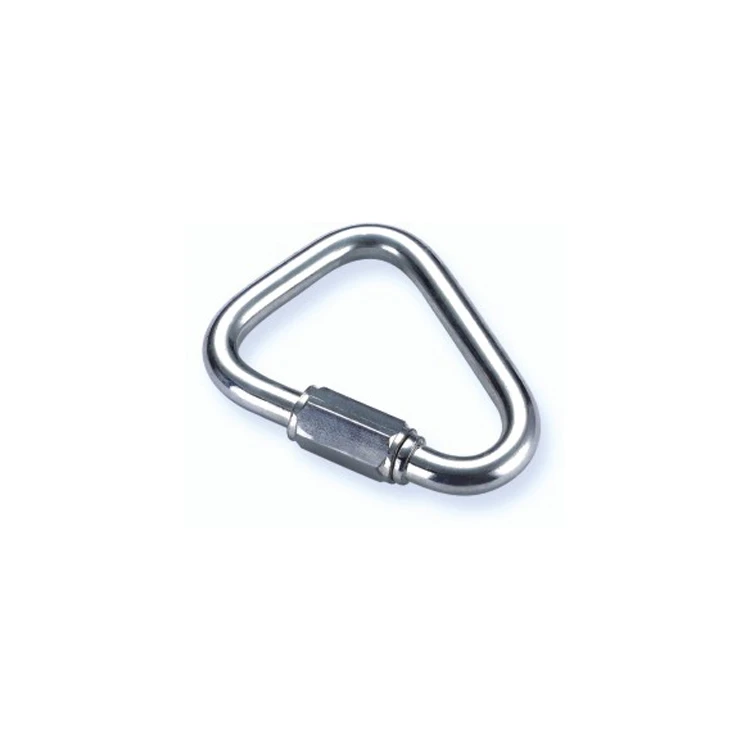
If you are looking for some reliable connecting hardware, you might be interested in our Zinc Plated Quick Link with Screw Lock. This quick link is made of high - quality materials and has a screw - lock design, providing a secure connection in rigging systems. It can be used in combination with springs, hydraulic, or pneumatic shock absorbers to ensure the safety and stability of the rigging.
Rock Climbing Carabiner Clips are another great option from our product line. These carabiners are lightweight yet strong, and they are widely used in various rigging applications, especially in aerial rigging and some outdoor rigging. They can be easily attached to shock absorbers to form a reliable rigging structure.
For applications where swiveling is required, our Simplex Snap with Swivel Nickel Plated is an ideal choice. The swivel feature allows for smooth rotation, reducing the stress on the rigging system. It can work well with different types of shock absorbers, enhancing the overall performance of the rigging.
Conclusion
In conclusion, understanding the different types of shock absorbers in rigging is crucial for ensuring the safety and efficiency of rigging systems. Each type of shock absorber has its own unique characteristics, advantages, and applications. Whether it's a hydraulic shock absorber for heavy - duty applications, a pneumatic shock absorber for adjustable solutions, or a rubber shock absorber for compact and corrosion - resistant needs, the right choice can make a significant difference in the performance of the rigging.
As a leading rigging hardware supplier, we are committed to providing our customers with high - quality products and professional advice. If you are in the market for shock absorbers or other rigging hardware, we encourage you to contact us for procurement and further discussions. We have a team of experts who can help you select the most suitable products for your specific rigging requirements.
References
- "Rigging Handbook," by McGill Tool Works.
- "Shock and Vibration Damping Handbook," by John F. Harvey.
- Technical journals on rigging engineering and shock absorber technology.





