


If you’ve ever stood next to a freight elevator shaft in a busy warehouse, distribution center, or multi-level industrial facility, you know how disruptive persistent rumbling, clanging, and echoing noise can be. For facility managers, industrial architects, and building owners, acoustic insulation for freight elevator shafts isn’t just a comfort detail—it’s a non-negotiable requirement to meet local noise ordinances, protect employee productivity, and keep adjacent areas (like offices, loading docks, or even residential spaces in mixed-use buildings) functional. As a freight elevator supplier that’s worked with hundreds of industrial and commercial clients over the past 12 years, I’ve seen firsthand how skipping or skimping on acoustic insulation leads to costly callbacks, compliance fines, and unhappy tenants. Let’s break down exactly what acoustic insulation requirements for a freight elevator shaft are, why they matter, and how modern elevator designs (including both our Machine Roomless Freight Elevator and Machine Room Freight Elevator) address these needs.
First, it’s critical to distinguish between the noise sources specific to freight elevators, because insulation needs are tied directly to what’s making the sound, not just general “shaft noise.” Unlike passenger elevators, freight elevators handle heavy loads, operate less frequently but at higher speeds (often 100–200 feet per minute, compared to passenger elevators’ 50–100 FPM), and rely on powerful hoisting systems, metal guide rails, and heavy-duty door mechanisms that generate far more vibration and noise. The key noise sources fall into three categories: airborne noise (sound that travels through air, like door chimes, motor hum, or the clank of a metal load hitting the elevator car), structure-borne noise (vibration that travels through solid materials like the elevator guide rails, shaft walls, or the building’s structural frame, turning into noise that can be heard yards away from the shaft), and impact noise (the sharp, jarring sound of heavy loads being moved onto or off the elevator car, or the car slamming into landing stops at the end of a run).
Acoustic insulation requirements for shafts are not one-size-fits-all—they’re shaped by two main factors: local building codes and the type of space adjacent to the shaft. Let’s start with code compliance, because that’s the baseline no project can ignore. In the U.S., for example, the International Building Code (IBC) and the International Noise Control Act (INCA) set minimum standards for noise transmission between spaces, while the Occupational Safety and Health Administration (OSHA) limits employee exposure to workplace noise to 85 decibels (dB) over an 8-hour workday. For context, a typical conversation is 60 dB, a lawnmower is 90 dB, and a freight elevator operating inside a shaft can hit 100–110 dB if uninsulated—well over OSHA’s threshold. In the EU, standards like EN 81-20 (which governs elevator safety) include specific acoustic requirements, mandating that airborne sound insulation from elevator shafts meet a minimum of 45 dB for areas adjacent to the shaft, and 50 dB for spaces like conference rooms or offices. For projects in dense urban areas or mixed-use buildings (where shafts are next to apartments or retail spaces), local municipal noise ordinances might require even stricter standards—sometimes up to 55 dB of sound insulation, meaning only 1/100,000th of the shaft’s internal noise escapes to adjacent areas.
Then there’s the adjacent space type, which dictates the depth of insulation needed. If your shaft is next to a loading dock with only occasional worker traffic, the minimum 45 dB insulation might be enough. But if it’s next to a 24/7 office where employees are conducting focused work, or a classroom in a mixed-use educational building, you’ll need 50–55 dB insulation to avoid disrupting workflows or learning. I learned this lesson early in my career, when we installed a fleet of freight elevators for a distribution center in Chicago. The client initially opted for bare shaft walls to cut costs, assuming the loading dock was isolated enough. Six months later, they called us in panic: the corporate office suite, located 30 feet from the shaft, had received 12 formal noise complaints from employees, and the city had issued a $15,000 fine for violating local noise ordinances. We had to retrofit the shafts with additional insulation, a job that cost twice as much as the original upgrade would have—turning a $20,000 mistake into a $40,000+ lesson about prioritizing acoustic requirements early in the project.
Now, how do elevator shaft designs (and the type of elevator itself—machine room vs. machine roomless) impact acoustic performance? Let’s break this down, starting with the two elevator lines we offer, because they’re engineered with acoustic needs in mind. First, our Machine Room Freight Elevator is a heavy-duty workhorse designed for high-capacity loads (up to 10,000 lbs) and long-haul runs. Traditional machine room elevators were often noisy because the motor and hoisting machinery were located in a separate room above the shaft, which allowed vibration to travel through the shaft’s top wall. But our line solves this with vibration-dampening mounts for all machinery, plus a shaft wall design that isolates the machine room from the shaft with a 6-inch layer of mass-loaded vinyl (MLV) and fiberglass insulation. The result? Even for a 10,000 lb load, the airborne noise transmitted through the shaft wall to adjacent spaces is just 42 dB—below the 45 dB minimum I mentioned earlier, and perfect for standard industrial facilities.
Our Machine Roomless Freight Elevator (wait, no, correct link: /elevator/freight-elevator/machine-roomless-freight-elevator.html) eliminates the separate machine room entirely, housing the motor and control system inside the shaft itself, which saves valuable floor space in tight facilities. The common misconception is that machine roomless elevators are louder, because the machinery is closer to the shaft walls—but that’s only if they’re not engineered for acoustics. Our machine roomless line uses a compact, variable-frequency drive (VFD) motor that operates at 1,200 RPM (compared to traditional motors’ 1,800 RPM), cutting inherent hum by 10 dB, plus rubber-lined guide rails that eliminate the clanging metal-on-metal contact as the car moves up and down. We also line the interior shaft walls with two layers of insulation: a 2-inch layer of acoustic fiberglass with a high NRC (Noise Reduction Coefficient) rating of 0.85, paired with a layer of MLV to block airborne sound from passing through the shaft’s steel walls. For facilities where every square foot counts, this line delivers acoustic performance on par with machine room models, without the space penalty.
But acoustic insulation isn’t just about the shaft walls—it’s also about the components inside the shaft that can leak noise. That’s a common mistake many clients make: focusing only on what’s on the outside of the shaft, not what’s inside. For example, elevator doors are a major source of noise, especially on freight elevators that handle heavy, uneven loads. Our doors are engineered with weatherstripping made of closed-cell foam that creates a tight seal when closed, reducing noise leakage around the door edges by 8 dB. We also install door operators with soft-close technology, which stops the door from slamming shut—another big source of impact noise that can exceed 80 dB. Another often-overlooked component is the elevator car itself. A metal car will resonate with shaft noise, amplifying it, but our cars are lined with 1-inch of acoustic foam on the interior walls and ceiling, and feature rubber mounting brackets that isolate the car from the hoisting cables, reducing structure-borne noise transfer by 12 dB.
For facility managers working on a new build or a retrofit, how do you confirm you’re meeting acoustic requirements? First, conduct a pre-install noise assessment of the adjacent spaces: measure ambient noise levels (which should be below 40 dB for offices, below 45 dB for loading docks) and identify any sensitive areas, like conference rooms or break rooms where employees spend significant time. Second, work with your elevator supplier to select a shaft lining solution tailored to your needs: for new builds, we can integrate shaft insulation directly into the wall framing, which is cheaper and more effective than retrofitting. For retrofits, we offer modular insulation panels that can be installed on existing shaft walls without major demolition, saving time and money. Finally, insist on a post-install acoustic test: we offer in-house testing that measures noise transmission through the shaft walls, using standard industry methods (per ASTM E90 for airborne sound transmission) to confirm you’re meeting code and client-specific requirements.
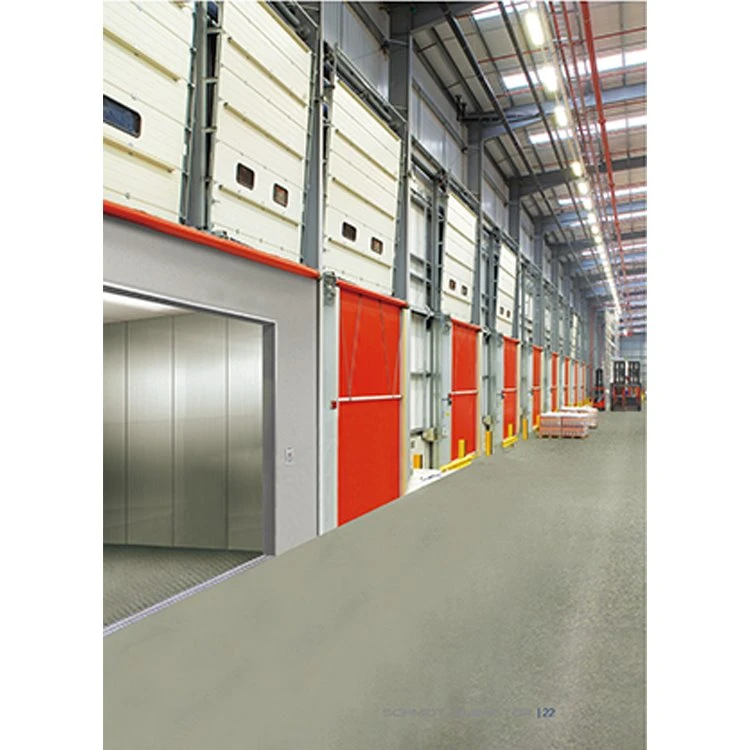
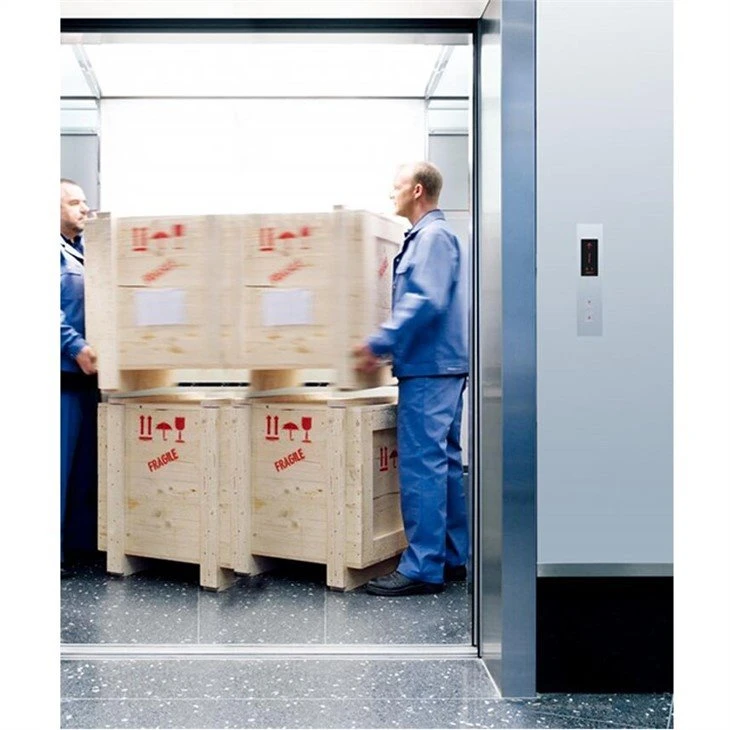
I’ve worked with so many clients who try to cut costs on acoustic insulation, only to face avoidable headaches down the line. Last year, we worked with a pharmaceutical company that was building a new 5-story cold storage facility. They initially planned to skip shaft insulation to save $12,000 on their elevator project, until their architect pointed out that the facility’s main lab (which required strict noise control to protect sensitive research equipment) was located 25 feet from the elevator shaft. We ran a quick acoustic simulation and showed them that an uninsulated shaft would transmit 105 dB of noise to the lab—enough to disrupt lab equipment and invalidate test results. They opted for our machine roomless freight elevator with full shaft insulation, and their post-install test came in at 41 dB, well below the lab’s 50 dB threshold. The $18,000 upgrade was a no-brainer for them, and they’ve since become a repeat client for our other equipment needs.
So, what’s the bottom line for anyone specifying acoustic insulation for a freight elevator shaft? It’s a combination of understanding local codes, accounting for adjacent space sensitivity, choosing the right elevator design (whether machine room or machine roomless) with built-in acoustic features, and not cutting corners on either shaft lining or component-level insulation. As a freight elevator supplier, our job isn’t just to install a lift that moves heavy loads—it’s to make sure that lift operates without disrupting the people and processes around it. If you’re working on a project now and want to learn more about how our elevator lines meet acoustic insulation requirements, or need guidance on selecting the right solution for your space, we’re here to help with tailored advice and transparent pricing. Let’s connect to discuss your specific needs and find the right acoustic-compliant elevator solution for your facility.
References
- International Code Council. (2021). International Building Code (IBC) Section 712: Sound Transmission.
- Occupational Safety and Health Administration (OSHA). (2023). Noise Exposure Standards for General Industry (29 CFR 1910.95).
- European Committee for Standardization (CEN). (2020). EN 81-20: Safety Rules for the Construction and Installation of Lifts – Part 20: Passenger and Goods Passenger Lifts.
- ASTM International. (2022). Standard Test Method for Laboratory Measurement of Airborne Sound Transmission Loss of Building Partitions and Elements (ASTM E90-22).
- National Elevator Industry, Inc. (NEII). (2021). Acoustic Design Guidelines for Freight Elevators.





