


Can a freight elevator be used for transporting construction materials? This is a question that often arises in the construction industry. As a freight elevator supplier, I'm here to provide a comprehensive answer.
Understanding the Basics of Freight Elevators
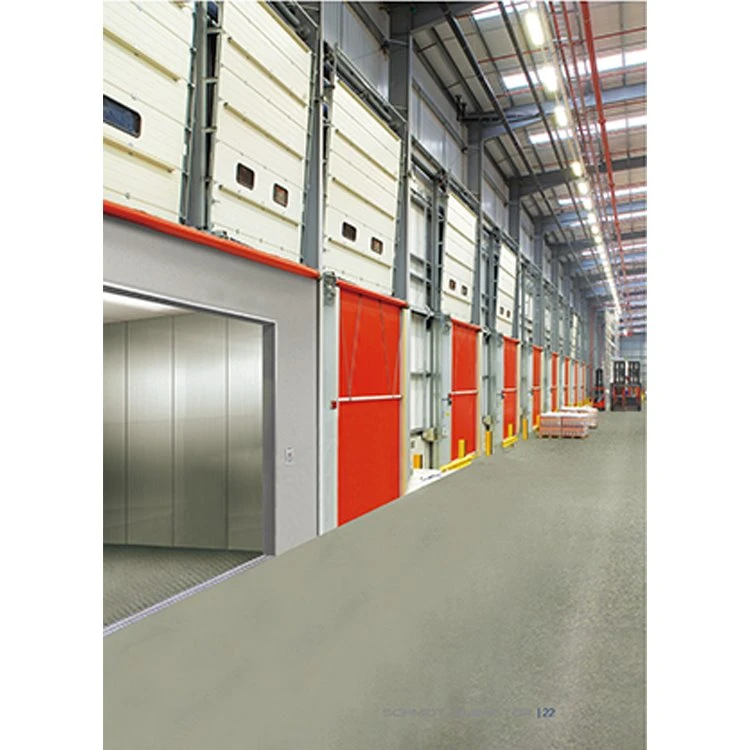
Freight elevators are designed to carry heavy loads, making them a potential solution for transporting construction materials. They are built with robust structures and powerful mechanical systems to handle large weights. Unlike passenger elevators, the primary purpose of freight elevators is to move goods rather than people, which means they are engineered to withstand the rigors of heavy - duty use.
There are two main types of freight elevators: the Machine Roomless Freight Elevator and the Machine Room Freight Elevator. The machine - roomless freight elevator offers a space - saving solution. It doesn't require a separate machine room, which is ideal for construction sites where space is limited. On the other hand, the machine room freight elevator has a dedicated room for the elevator machinery. This type is often preferred when more complex mechanical systems are needed to handle extremely heavy loads.
Suitability for Transporting Construction Materials
Weight Capacity
One of the most crucial factors in transporting construction materials is weight. Construction materials such as bricks, cement bags, and steel bars can be extremely heavy. Freight elevators come with different weight capacities, ranging from a few hundred kilograms to several tons. For example, a small - scale construction project might require an elevator with a capacity of 1 - 2 tons, which can easily carry several pallets of bricks or bags of cement. In large - scale construction, where heavy machinery and pre - fabricated building components are involved, elevators with capacities of 5 tons or more are needed. Our freight elevators are designed to meet these varying weight requirements, ensuring that you can transport any type of construction material safely.
Size and Dimensions
The size and shape of the elevator car are also important considerations. Construction materials come in different sizes, from long lumber to large panels. A freight elevator with a large and spacious car can accommodate these materials without the need for excessive disassembling or reshaping. The height of the car is also crucial, especially for transporting tall items like steel columns. Our elevator models are available in a variety of sizes and configurations, allowing you to choose the one that best fits your construction material transportation needs.
Durability and Robustness
Construction sites are harsh environments. There is a risk of impact, abrasion, and exposure to dust and debris. Freight elevators are built to be durable. They have reinforced cabins and strong doors to prevent damage during the loading and unloading process. The mechanical components are also designed to withstand continuous use under tough conditions. For instance, the hoisting ropes are made of high - strength steel, and the guide rails are engineered to provide smooth and stable movement even when carrying heavy loads.
Safety Considerations
When using a freight elevator to transport construction materials, safety is of utmost importance.
Overloading Protection
All our freight elevators are equipped with overloading protection systems. These systems can detect when the weight inside the elevator exceeds the specified capacity. Once this happens, the elevator will not operate, preventing potential mechanical failures and safety hazards. This is crucial in construction, where workers might be tempted to overload the elevator to save time.
Emergency Stop and Safety Devices
Emergency stop buttons are installed inside and outside the elevator car. In case of an emergency, such as a jam or a sudden mechanical malfunction, these buttons can be pressed to immediately halt the elevator's movement. Additionally, there are safety devices like door interlocks and speed governors. Door interlocks ensure that the elevator can only move when the doors are properly closed, while speed governors monitor the elevator's speed and activate a braking system if the speed exceeds a safe limit.

Efficiency and Productivity
Using a freight elevator for transporting construction materials can significantly improve efficiency and productivity on a construction site.
Reduced Manpower
Without a freight elevator, transporting construction materials to higher floors would require a large number of workers manually carrying the materials up the stairs or using makeshift pulley systems. This is not only time - consuming but also physically demanding. A freight elevator can do the job with minimal manpower, allowing workers to focus on other important tasks such as construction and installation.
Faster Transport
Freight elevators are designed to move quickly. They can transport construction materials from the ground floor to the upper floors in a matter of minutes, which is much faster than manual methods. This can save a significant amount of time during the construction process, leading to faster project completion.
Case Studies
Let's look at some real - world examples of how freight elevators have been used to transport construction materials.
In a high - rise building construction project, a Machine Room Freight Elevator with a capacity of 3 tons was installed. It was used to transport large pre - fabricated wall panels, steel beams, and concrete blocks. The elevator's spacious car and high - speed operation allowed the construction team to complete the building's superstructure ahead of schedule.
In a renovation project of an old industrial building, a Machine Roomless Freight Elevator was chosen due to the limited space available. The elevator was able to transport a variety of materials, including plumbing fixtures, electrical equipment, and interior decoration materials. Its compact design and efficient operation made it an ideal choice for this confined construction environment.
Conclusion
In conclusion, a freight elevator can definitely be used for transporting construction materials. With its high weight capacity, suitable size, durability, safety features, and efficiency, it is a valuable asset on any construction site. Whether you are working on a small - scale residential project or a large - scale commercial building, there is a freight elevator model that can meet your needs.
If you are involved in a construction project and are considering using a freight elevator for transporting construction materials, I encourage you to reach out to us. We have a team of experts who can help you choose the right elevator based on your specific requirements. Contact us to discuss your project and start the procurement process. We look forward to partnering with you to ensure the success of your construction project.
References
- Elevator Handbook. Laughton, M. A. (Eds.). Newnes.
- Building Construction: Principles, Materials, and Systems. Parkin, Robert. Wiley.





