


Turnbuckles are essential components in various industries, serving the crucial function of adjusting tension in cables, ropes, and rods. They find applications in construction, marine, and many other fields. However, a question often arises: Are turnbuckles suitable for high - pressure applications? In this blog, as a turnbuckle supplier, I will delve into this topic and provide insights based on industry knowledge and experience.
Understanding Turnbuckles
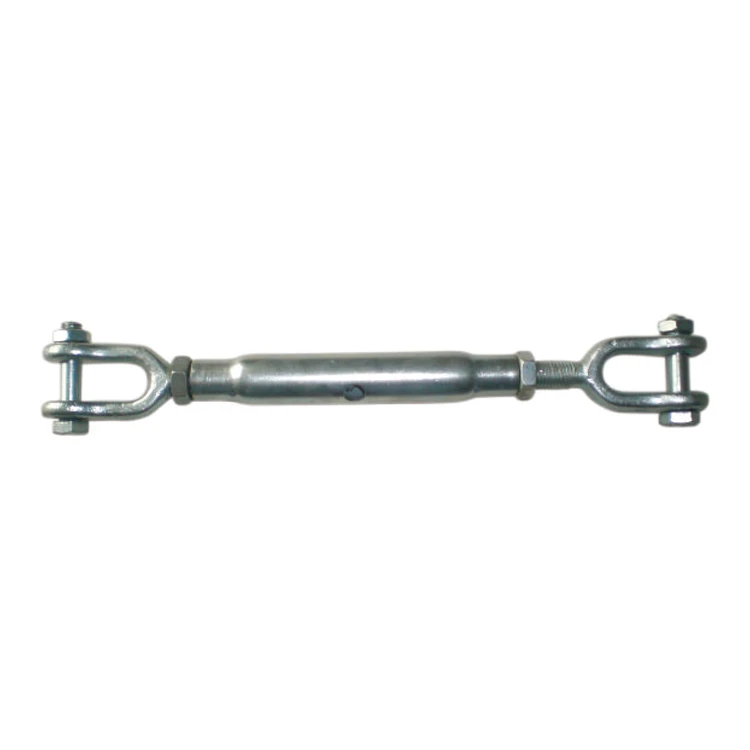
Turnbuckles are mechanical devices consisting of two threaded eye bolts, one with a right - hand thread and the other with a left - hand thread, connected by a central body. By rotating the central body, the two eye bolts move either towards or away from each other, allowing for easy adjustment of tension. Different types of turnbuckles are available to suit various needs, such as Steel Cable Turnbuckle, Korean Malleable Type Turnbuckles, Turnbuckle Pipe Body Hook and Eye End, Us Type forged Steel Wire Rope Turnbuckle Jaw and Jaw, and Galvanized Turnbuckle Din1480 Eye and Eye Type.
Factors Affecting the Suitability of Turnbuckles for High - Pressure Applications
Material Strength
The material used in the construction of turnbuckles is a critical factor. High - pressure applications demand turnbuckles made from high - strength materials. For example, forged steel turnbuckles are often preferred as they offer excellent strength and durability. Steel has a high tensile strength, which enables it to withstand substantial forces without deforming or breaking. Malleable iron turnbuckles, while more cost - effective, may not be as suitable for extremely high - pressure situations due to their relatively lower strength.
Thread Design
The thread design of turnbuckles also plays a vital role in high - pressure applications. Well - engineered threads ensure a secure connection between the eye bolts and the central body. Coarse threads can provide a higher load - bearing capacity as they distribute the stress over a larger surface area. Additionally, the quality of the thread manufacturing is crucial. Precise and smooth threads reduce the risk of thread stripping under high pressure, which could lead to a catastrophic failure of the turnbuckle.
Manufacturing Quality
The overall manufacturing quality of turnbuckles cannot be overlooked. High - quality turnbuckles are produced with strict quality control measures. This includes proper heat treatment to enhance the material's strength and toughness, accurate machining of the components to ensure a perfect fit, and thorough inspection for any defects. Low - quality turnbuckles may have hidden flaws, such as voids or cracks, which can compromise their performance under high pressure.
Applications Where Turnbuckles Can Withstand High Pressure
Construction
In construction, turnbuckles are used in applications such as cable - stayed bridges and high - rise building facades. These structures are subjected to high wind, seismic, and gravitational forces. High - strength turnbuckles are used to adjust the tension in cables that support the structure. For instance, in cable - stayed bridges, turnbuckles help maintain the proper tension in the cables, which is essential for the bridge's stability and safety.

Marine Industry
The marine environment is another area where turnbuckles are exposed to high pressure. They are used on ships and offshore platforms to secure rigging, mooring lines, and other components. Waves, strong winds, and the weight of the vessel itself create significant forces on these components. Turnbuckles made from corrosion - resistant materials, such as stainless steel or galvanized steel, are used to withstand the harsh marine conditions and high pressures over long periods.
Applications Where Turnbuckles May Not Be Adequate
Extreme Hydraulic or Pneumatic Systems
In extreme hydraulic or pneumatic systems where pressures can reach thousands of pounds per square inch (psi), turnbuckles are generally not the appropriate choice. These systems require specialized components, such as high - pressure cylinders and valves, designed to handle the extreme forces. Turnbuckles are more suitable for applications where the pressure is applied in a linear, tension - based manner rather than in a confined, high - pressure fluid environment.
Ensuring the Safe Use of Turnbuckles in High - Pressure Applications
Proper Selection
When considering using turnbuckles in high - pressure applications, it is crucial to select the right type based on the specific requirements. Consider factors such as the expected load, the working environment (e.g., temperature, humidity, presence of corrosive substances), and the frequency of adjustment. Refer to engineering specifications and load - capacity charts provided by the manufacturer to make an informed decision.
Regular Inspection and Maintenance
Regular inspection and maintenance are essential to ensure the continued safe use of turnbuckles in high - pressure applications. Check for signs of wear, such as thread damage, corrosion, or deformation. Any damaged turnbuckles should be replaced immediately. Lubrication of the threads can also help reduce friction and prevent premature wear.
Professional Installation
Proper installation is key to the performance of turnbuckles in high - pressure applications. Ensure that the turnbuckles are installed correctly, with the appropriate tightening torque. Incorrect installation can lead to uneven stress distribution, which may cause premature failure of the turnbuckle.
Conclusion
In summary, turnbuckles can be suitable for high - pressure applications, provided that they are made from high - strength materials, have a well - designed thread, and are manufactured to high quality standards. They are widely used in construction, marine, and other industries where high - pressure, tension - based forces are present. However, they are not suitable for extreme hydraulic or pneumatic systems. As a turnbuckle supplier, we offer a wide range of turnbuckles, including Steel Cable Turnbuckle, Korean Malleable Type Turnbuckles, and others, to meet different needs. If you are interested in purchasing turnbuckles for high - pressure or other applications, please feel free to contact us for commercial negotiation.
References
- "Mechanical Design Handbook" by Joseph E. Shigley and Charles R. Mischke
- Industry standards for construction and marine rigging components





