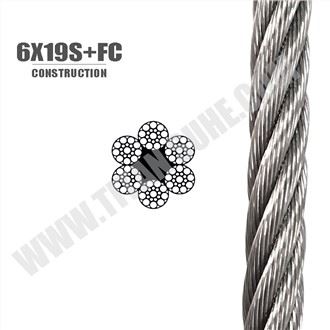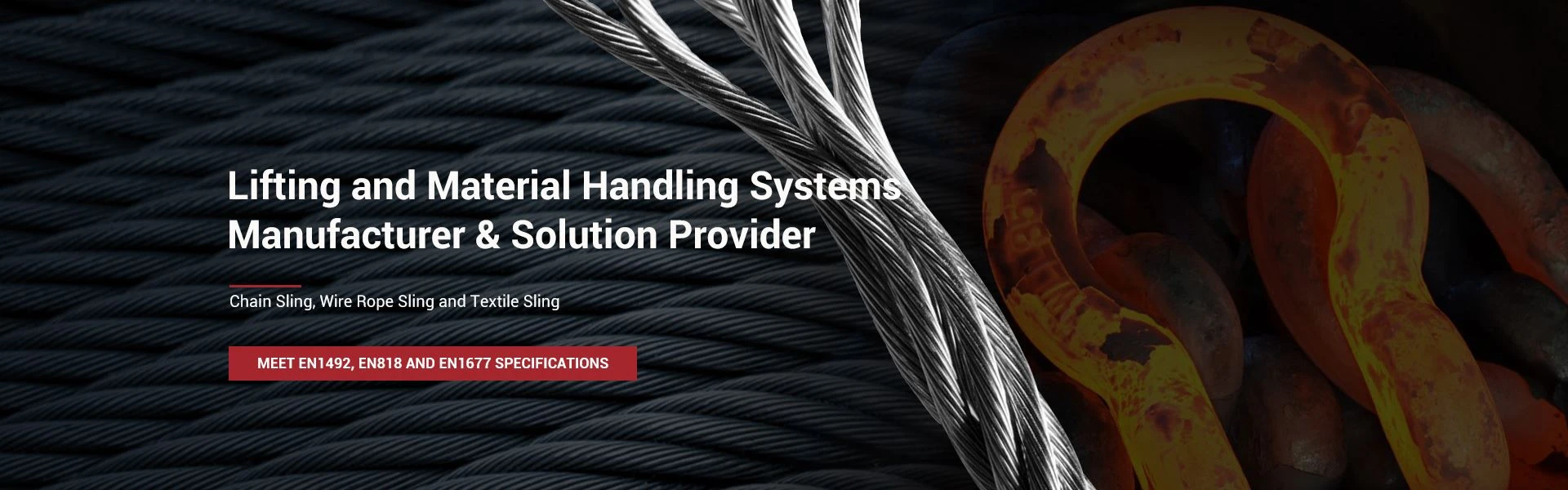
Wire rope is very common in construction cranes. It is formed by winding single steel wires together to form strands, then some strands are wound into a rope core, and then outer strands composed of other strands are wound around the rope core to form a wire rope. Some imported steel wire ropes also contain a plastic ferrule, usually in the form of a plastic coating, which is covered on the rope core through special treatment. Important steel wire ropes are filled with appropriate lubricants to reduce friction.
Domestic steel wire ropes are generally divided into organic matter (hemp core and cotton core), asbestos core or metal core according to the rope core material. There is usually no filler or lubricant inside the rope. According to the mutual direction of the strands and strands, the steel wire rope can be divided into the winding rope and the cross winding rope. According to the twist direction of the strand rope, it can be divided into left and right twists in the same direction and left and right alternating twists; imported steel wire ropes Generally, the winding rope is used as the standard rope, and the direction of the wire rope is specified to be consistent with the direction of the outer strand helix relative to the longitudinal axis of the wire rope, which is divided into left-handed and right-handed. Correspondingly, the direction of rotation of the strands is also specified, that is, the direction of the helix of the outer filaments constituting the strands is the direction of rotation of each share based on the longitudinal axis of the strands. When the ordinary steel wire rope is used in a single rope, it rotates in the opposite direction of the wire rope. When used in a pulley block, the lifting wire rope will twist due to the rotation of the wire rope, which is commonly known as twisting.