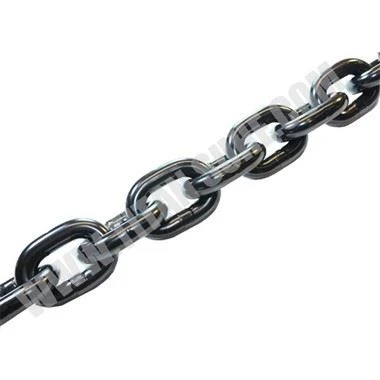
Lifting chains are essential in industries such as construction, marine operations, and heavy equipment handling. As lifting chains, Grade 80 (G80) and Grade 100 (G100) lifting chains are the most commonly used. So how to choose the right chain? Depends on the working conditions and load requirements.
1. Material and Strength
Both G80 and G100 chains are made from alloy steel, but the materials and performance differ.
G80 Chains: Typically produced from 20Mn2 alloy steel, offering good tensile strength and good wear resistance. They are suitable for most standard lifting and rigging tasks.
G100 Chains: Manufactured with advanced alloy steels such as 22MnCrNi, providing higher tensile and yield strength. With a minimum breaking strength of 1000 MPa, G100 chains deliver around 25% more strength than G80 (which BL≥800 MPa). This makes them the preferred choice for applications requiring higher load capacity.
Both grades are designed with a 4:1 safety factor, but G100 chains are subject to more stringent testing requirements.
2. Surface Treatment and Corrosion Resistance
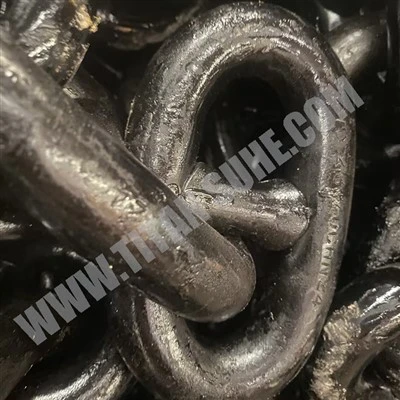
Chains can be supplied with different finishes such as self color, black, galvanizing, or paint coatings. G100 chains, however, often has enhanced surface treatments to improve corrosion resistance, making them more durable in harsh environments like marine.
3. Size Range and Load Capacity
G80 Chains: Available in diameters from 3 mm to 32 mm, offering a wide range for general lifting needs.
G100 Chains: Typically supplied in sizes from 6 mm to 22 mm, with each diameter rated for a higher working load than the same size in G80.
4. Cost Considerations
G80 Chains: Cost-effective and widely used in lifting applications
G100 Chains: More expensive due to advanced materials and manufacturing processes, but deliver higher performance, especially in offshore, mining, or heavy-duty industrial lifting environments.
Conclusion
When choosing between G80 and G100 lifting chains, it is important to evaluate load capacity, operating conditions, and budget. For everyday lifting operations, G80 chains provide reliable performance at a reasonable price. For demanding projects that require higher strength, and resistance to extreme conditions, G100 chains are the safer and more efficient option.